Spatial ecology of pelagic predators in the Arabian Sea
Tracking pelagic fish and sharks in the Arabian Sea to map migration routes, identify key habitats, and inform sustainable fisheries management.
Short Project Description / Summary
Tracking pelagic fish and sharks in the Arabian Sea to map migration routes, identify key habitats, and inform sustainable fisheries management.
Longer Project Description
The UAE’s offshore waters are known to support populations of iconic pelagic top predators such as billfish and tuna that are targeted locally by recreational and commercial fisheries. These species are also highly migratory and, in many cases, appear to be only seasonal visitors to the Gulf of Oman. However, it is currently unknown where the populations that use UAE waters migrate from and to, and how they are connected to wider Indian Ocean and Arabian Sea stocks. This lack of information on the spatial ecology of predatory fishes and sharks hinders our ability to effectively conserve them and manage fisheries sustainably.
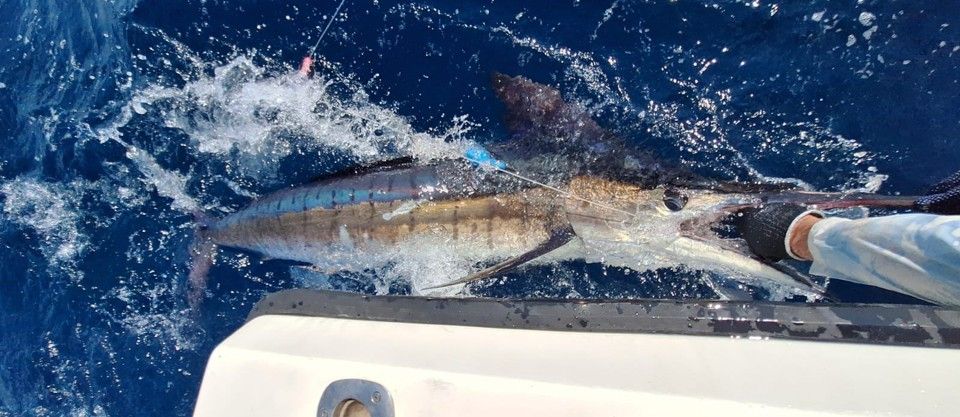
To address this gap, this project is using biologging and satellite tagging techniques to track the movements of multiple species of pelagic fishes and sharks in UAE waters, including black, blue and striped marlin, Indo-Pacific sailfish, shortfin mako sharks, and yellowfin tuna. The aim is to quantify migratory connectivity, characterize habitat preferences, and locate critical habitats, helping to inform science-based policy and management that will enhance the conservation of these species. Findings will be shared with local Government agencies and regional fisheries management organisations (e.g. the Indian Ocean Tuna Commission), as well as contributing to global marine megafauna tracking initiatives. The project began in October 2025, working closely with the local sports fishing community as key project partners.